

.png)
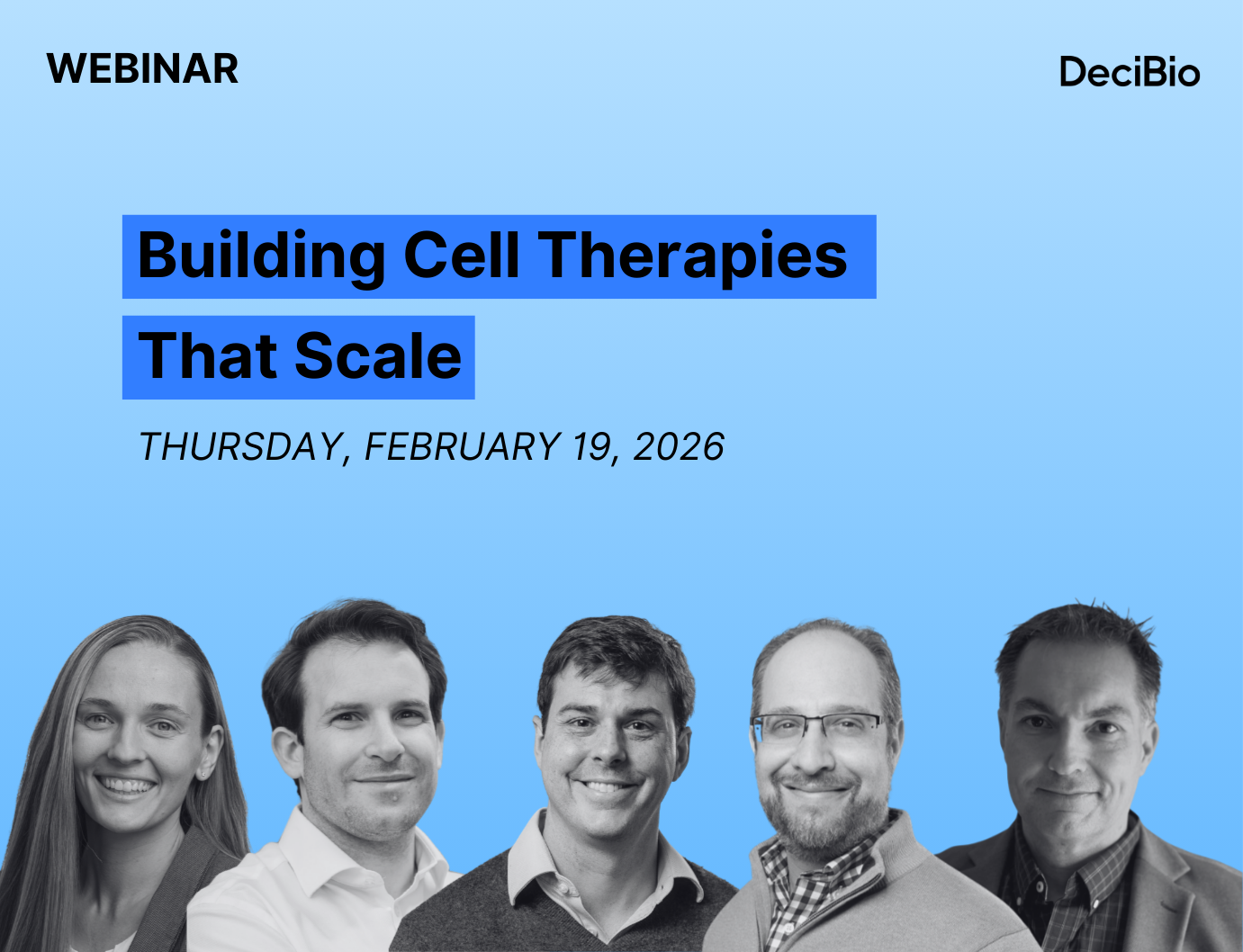
This webinar was recorded on Thursday, February 19, 2026.
Key Insights from the Advanced Therapies Webinar
The cell therapy industry is rapidly maturing, shifting focus from early-stage biological discovery to the industrialization and operational execution required for global patient access. Our recent webinar brought together experts to discuss the critical balance between scientific innovation and the commercial readiness necessary to scale these life-saving treatments.
The Modality Evolution: Complementary vs. Competitive Approaches
The industry is currently debating whether the rise of in vivo cell therapies represents a structural shift away from traditional ex vivo manufacturing or a complementary expansion. Panelists noted that while in vivo approaches offer a promising "scale thesis" and potential for global reach, they remain in the early stages of development for many malignancies. Mark Wallet (CSO, Link Cell Therapies) emphasized that the "active ingredient" is the CAR molecular entity, while the delivery mode—whether autologous, allogeneic, or in vivo—is the "formulation" that must be selected based on the specific indication.
Prioritizing Commercial Viability and Economics
A central theme of the discussion was the "commercial viability problem" facing current therapies. Jason Foster (CEO, Ori Biotech) highlighted that developers must move beyond pure science to solve the "economic problem," noting that therapies costing $300,000 to manufacture may not be sustainable if they only reach a few hundred patients. Panelists urged developers to include Cost of Goods and throughput targets in their Target Product Profiles (TPPs) as early as the preclinical phase to ensure long-term success.
Scaling Without Overbuilding: A Strategic Recalibration
Reflecting on recent cycles of manufacturing overcapacity, the panel discussed a shift toward capital efficiency. Aaron Vernon (Founder, ACE Biopharm Consulting) noted that internal manufacturing is no longer the "base assumption" it was in 2017; instead, developers are increasingly leveraging specialized partner networks and automated platforms to scale responsibly. This "modernization" of processes allows for better yield and lower costs without the risk of building massive, underutilized facilities.
Navigating Regulatory Uncertainty and Global Models
While the FDA has signaled flexibility in CMC requirements, developers continue to prioritize "building for quality" from the start to avoid existential regulatory risks. The panel also contrasted the U.S. approach with international models, such as China’s Investigator-Initiated Trial (IIT) system, which allows for rapid parallel testing of multiple constructs to "learn in the clinic" more efficiently. Jay Rosanelli (CEO, Syenex) added that "programmable medicines" and platform technology designations will be key to streamlining these regulatory paths in the future.
Speakers:
- Jason C. Foster, CEO & Executive Director, Ori Biotech
- Jay Rosanelli, CEO & Co-Founder, Syenex
- Aaron Vernon, Founder & Principal, ACE Biopharm Consulting LLC
- Mark Wallet, Chief Scientific Officer, Link Cell Therapies
Moderator:
- Rebecca Burnham, PhD, Director of Market Reports Division, DeciBio Consulting
Check out our full webinar below to hear the full insights and more.
Webinar Recording:

.png)
.png)